
Ask someone whether they would like to live to 100 and watch them hesitate.
It is a revealing pause. What people are picturing in that half second is not a triple-figure birthday. It is the last decade of it: the reduced mobility, the medication schedule, the loss of independence, the version of themselves they would not choose to be. Given the choice between 100 years with a difficult final fifteen and 85 good ones, most people take the 85 without much deliberation.
Which tells you something important about the longevity conversation currently dominating wellness in Dubai and beyond. It has become extremely loud, increasingly expensive, and it is often measuring the wrong thing.
The distinction worth knowing is between lifespan and healthspan. Lifespan is how long you live. Healthspan is how long you live well, without significant chronic disease or functional decline.
Globally, the two have been drifting apart for decades. Medicine has become very good at extending lifespan, largely by keeping people alive through conditions that would once have killed them. It has been far less successful at extending the healthy portion. The result is a widening gap, often close to a decade, spent in decline.
Closing that gap is a more useful ambition than adding years to the end. It is also, conveniently, more achievable, because the things that compress the period of decline are largely things you can influence now rather than technologies you are waiting on.
If you follow longevity content online you will absorb a great deal about cold exposure, fasting protocols, sauna cycles, supplement stacks and increasingly elaborate morning routines. Some of this has reasonable evidence behind it. Most of it is at the margins.
The factors with the strongest predictive relationship to how well you age are considerably less interesting to talk about.
Muscle mass and strength. Grip strength alone is one of the better predictors of all-cause mortality in older adults, largely because it stands in for overall muscular condition. Muscle is metabolically active tissue, it protects against falls, and it is lost steadily from the fourth decade onwards unless you actively defend it. Resistance training twice a week is not glamorous. It is close to non-negotiable.
Cardiorespiratory fitness. VO2 max, in plain terms your capacity to use oxygen under load, sits near the top of almost every list of longevity predictors. Moving from the bottom quartile to merely average is associated with one of the largest risk reductions available in preventive medicine.
Metabolic health. Insulin sensitivity, visceral fat, blood pressure, lipid profile. This cluster underpins the majority of what shortens healthspan, and it is largely silent until it is not.
Sleep, and the willingness to protect it. Chronically shortened sleep affects glucose regulation, appetite signalling, immune function and cognitive performance. It is the intervention people most readily sacrifice and least readily replace.
Social connection. Consistently associated with mortality risk at a magnitude comparable to well-known physical risk factors. It appears in almost no longevity protocols and in almost every study of populations who age well.
None of this makes for compelling content. All of it matters more than your supplement stack.
Here is where the picture gets more practical, and where most people stall.
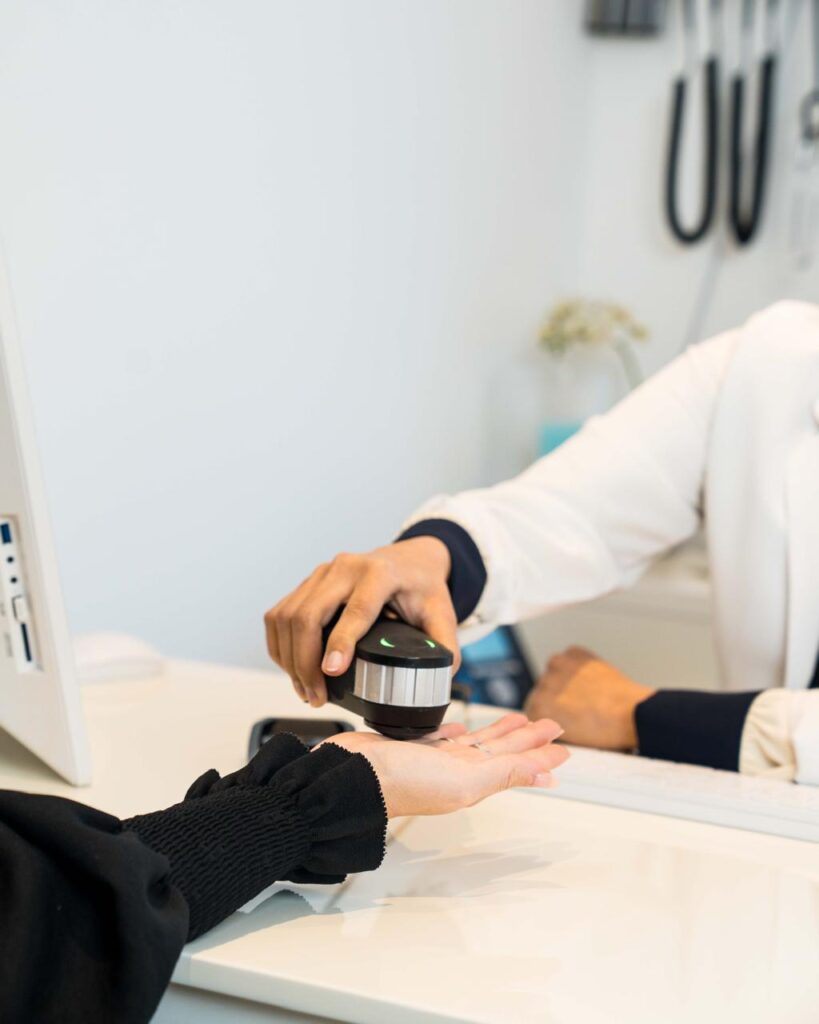
Almost everyone reading this has a rough sense of whether they are fit, tired or carrying more weight than they would like. Very few could tell you their fasting insulin, their ApoB, their inflammatory markers, their thyroid function or their vitamin D status. These are the numbers that describe what is happening beneath the surface, often years before symptoms arrive.
This is the entire logic of preventive health. A comprehensive diagnostic and screening panel establishes where you actually are, rather than where you assume you are, and creates a baseline you can measure against later. The results only become useful when someone interprets them in the context of your history and goals, which is the role of a private GP consultation rather than a PDF emailed to your inbox.
The most common outcome is not dramatic. It is two or three specific, correctable findings that would otherwise have gone unnoticed for years.
There is a reasonable question to ask about clinic-based longevity treatments, and it deserves an honest answer rather than a brochure one.
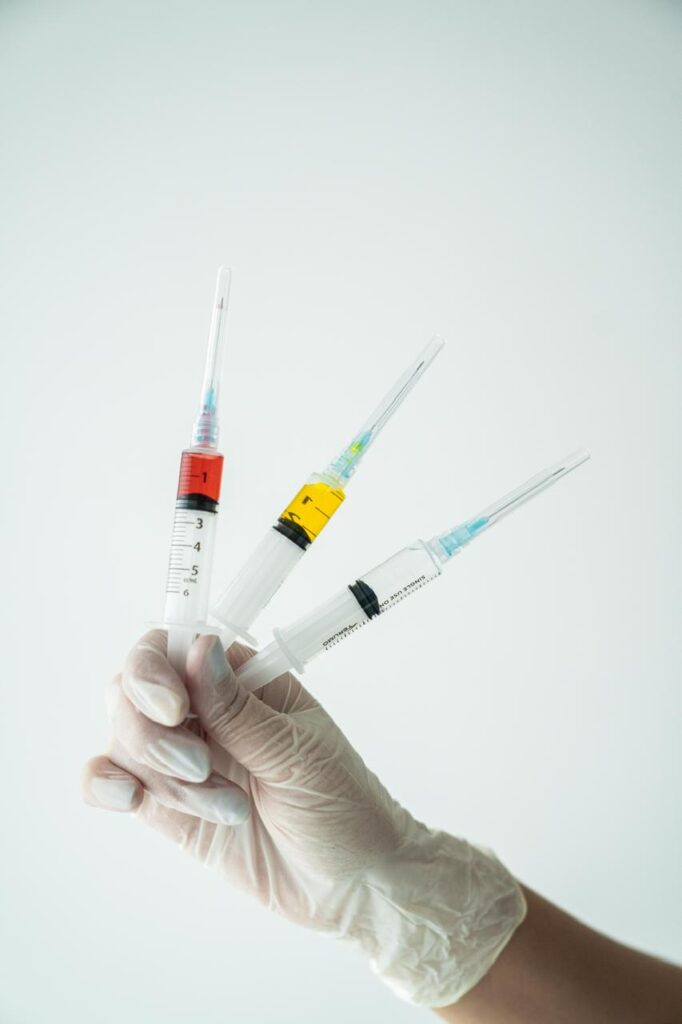
Correcting a measured deficiency is well established. If your bloods show low B12, low iron or low vitamin D, addressing that produces a real and often noticeable change. Where absorption is compromised or levels are low enough to warrant it, intravenous nutrient therapy and vitamin booster injections are efficient delivery routes.
NAD+ therapy sits in a different category. NAD+ is genuinely central to cellular energy production and declines with age, and the mechanistic case is interesting. Human clinical evidence for long-term outcomes is still developing, and anyone telling you otherwise is overselling. Many clients report meaningful improvements in energy and clarity, which is worth something, but it should be understood as part of a broader plan rather than the plan itself.
The same honesty applies to chelation therapy, which has a specific and legitimate use in cases of demonstrated heavy metal burden, and to stem cell IV therapy, an area of active research where the science is moving quickly but conclusions should be drawn carefully.
The useful principle: treatments that correct something you have measured are on firm ground. Treatments taken speculatively, in place of the fundamentals, are not.
Aesthetic treatment occupies an odd position in this conversation. It is sometimes dismissed as vanity that has nothing to do with real longevity, which is not quite fair, and sometimes presented as anti-ageing in itself, which is considerably less fair.
Skin ageing is largely driven by cumulative UV exposure, which in this part of the world is substantial, along with inflammation and glycation. Those are the same processes at work elsewhere in the body. Protecting your skin properly is genuinely preventive, not merely cosmetic.
What treatments such as facials, Hydrafacial and advanced skin technology do well is maintain skin health and appearance over time. What they do not do is influence the internal picture. Looking well and being well are related, but they are not the same measurement, and it is worth being clear-eyed about which one you are buying.
The uncomfortable truth about healthspan is that it is built from ordinary decisions repeated across decades, not from intensive intervention undertaken occasionally. A rigorous three-month programme followed by eighteen months of nothing produces very little. Moderate effort sustained produces a great deal.
This is why structure tends to outperform enthusiasm. A wellness programme built around your own diagnostics, reviewed and adjusted as those numbers change, is less exciting than a protocol you found online. It is also far more likely to still be happening in two years, which is the only timeframe that counts.
The best version of this is unremarkable to watch from the outside. Someone who trains regularly, sleeps properly, eats well enough, sees people they care about, and knows their numbers because they check them.
The Elixir Clinic’s teams in Dubai and Abu Dhabi approach longevity from that starting point: comprehensive diagnostics first, then a plan built around what your results actually show.
Book a treatment and start with a complimentary GP consultation.
This article is for general information and is not a substitute for individual medical advice. Speak to a qualified practitioner before starting any new treatment.

